Premium Working Escapes: Evaluating the Best Summer Villas for Remote Work Architecture and Infrastructure
Best summer villas for remote work. The convergence of global digital infrastructure and executive-level flexible labor has fundamentally redefined seasonal real estate. Historically, the premium summer rental market operated exclusively as an instrument of leisure, serving to isolate occupants from corporate responsibilities. Today, high-value professionals require properties that simultaneously function as high-yield workspaces and restorative sanctuaries. Consequently, a property’s value is no longer determined by its aesthetic appeal or proximity to a coastline alone.
Evaluating a temporary seasonal asset for professional use requires analyzing variables that transcend traditional hospitality standards. Adequate natural illumination, acoustical isolation, and data transmission stability must be assessed with engineering precision. When these core components fail, an occupant’s operational capacity degrades rapidly, introducing severe friction into professional workflows. A clear structural baseline is therefore needed to classify a residential property as an asset capable of sustaining corporate governance from afar.
Furthermore, regional variations in climate, local municipal grid dependability, and regional architectural archetypes create distinct operational environments. A Mediterranean stone estate presents radically different network propagation and thermal challenges than a glass-and-timber pavilion in the Pacific Northwest. To mitigate risk, asset managers, corporate relocation specialists, and high-net-worth professionals must apply rigorous cross-disciplinary frameworks. This comprehensive analysis evaluates the underlying infrastructure, risk landscapes, and procurement strategies that separate premium real estate from functional workspaces.
Understanding “best summer villas for remote work”
The categorization of real estate under the designation of best summer villas for remote work represents a profound shift in property assessment. In traditional premium real estate marketing, the term luxury focuses primarily on superficial luxury, including custom infinity pools or high-end kitchen finishes. For a distributed professional, however, true luxury is measured through structural reliability, environmental autonomy, and the preservation of cognitive focus. A villa lacks professional utility if its architectural design permits external acoustic infiltration or lacks structural provisions for modern high-speed data architecture.
A common analytical error involves treating seasonal residential assets as uniformly adaptable workspaces. Many premium properties are intentionally designed with open-plan layouts that lack dedicated acoustic zoning, rendering them unsuitable for simultaneous executive-level communications. Furthermore, historic structures often feature thick load-bearing masonry walls that impede internal radio frequency propagation, severely degrading wireless local area networks. Without strategic structural retrofitting, these aesthetic choices create severe operational challenges during high-stakes business operations.
To establish true professional utility, a villa must possess an enterprise-grade infrastructure baseline. This baseline includes multi-source internet redundancy, dedicated electrical sub-circuits, and precise spatial ergonomics engineered to mitigate physical fatigue over extended work hours. When these elements are integrated directly into the property’s design, the asset transitions from a simple vacation rental into a high-performance outpost. It is this fundamental operational capability that defines the modern high-end working estate.
The Structural and Macro-Environmental Evolution of Modern Productive Spaces
Gilded Age Outposts and Corporate Dissociation
The practice of relocating to seasonal estates for summer operations roots itself in the late nineteenth-century industrial economy. During this era, wealthy executives built sprawling compounds along the northeastern seaboard of the United States to escape dense urban environments. These properties were explicitly designed for complete disconnection from corporate activity, utilizing massive stone masonry and heavy timber to isolate occupants from urban pressures. Communication with financial centers relied on analog telegraph or physical courier systems, ensuring that operational engagement remained rare and highly deliberate.
The Rise of Post-War Connectivity Architecture
During the mid-twentieth century, the expansion of telephonic networks and the highway system initiated a transformation in seasonal residential design. In regions such as Southern California and the French Riviera, modernism introduced expansive glass façades and open structural floor plans. While these structures integrated the surrounding landscape, their layouts did not include spaces for formal business tasks, reflecting an era when work remained bound to central corporate offices.
The Integrated Digital Sovereignty Paradigm
In the current real estate landscape, the separation between commercial infrastructure and residential design has broken down entirely. The widespread adoption of cloud computing and high-definition communications demands that modern premium villas function as sovereign logistical nodes. Modern properties are increasingly evaluated based on their resilience to environmental stress and grid instability. A modern summer villa must maintain operational integrity during severe weather events, making advanced engineering and utility redundancy critical indicators of its real estate value.
Structural Frameworks and Analytical Evaluation Models
To properly evaluate a property’s suitability for high-stakes remote operations, asset managers utilize specialized mental models. These models help quantify environmental and structural variables that surface-level evaluations ignore.
The Data Continuity Index (DCI)
The Data Continuity Index is a specialized model used to quantify a villa’s connectivity resilience across multiple communication pathways. This framework evaluates the property based on the presence of physical fiber-optic lines, low-Earth-orbit satellite backup arrays, and cellular network signal strength.
A core constraint of the DCI framework is that high scores often require visible hardware installations, which can clash with local architectural preservation guidelines in historic regions.
The Luminescence and Thermal Balance Model
This analytical framework evaluates how solar radiation affects both human cognitive performance and building mechanical systems over long working hours. It maps internal solar heat gain against the energy needs of localized HVAC units, alongside checking for glare on digital displays. Properties with uncalibrated glass windows often suffer from intense visual glare and rapid heat retention, forcing air conditioning systems to run continuously. This creates both acoustic disturbance and increased structural wear.
The Spatial Decoupling Efficiency Framework
This model measures how effectively a villa’s floor plan isolates work environments from the property’s leisure and living zones.
An optimal score requires a clear physical separation between work zones and recreational spaces. This layout ensures that guest movements do not disturb high-stakes professional activities occurring elsewhere in the villa.
Architectural Typologies and Regional Infrastructure Variations
The global distribution of premium working villas reveals distinct regional approaches to balancing architectural heritage with technical performance.
Mediterranean Dry-Stone Bastions
Common throughout the coastlines of Spain, Italy, and Greece, these villas utilize thick, load-bearing stone walls that provide excellent thermal mass. This construction style keeps interior spaces naturally cool during intense summer heat, reducing reliance on mechanical air conditioning systems. However, these thick stone barriers present a significant challenge for internal wireless network signals, requiring the installation of wired Ethernet backhauls and strategically placed wireless access points in every room.
Nordic Timber and Glass Pavilions
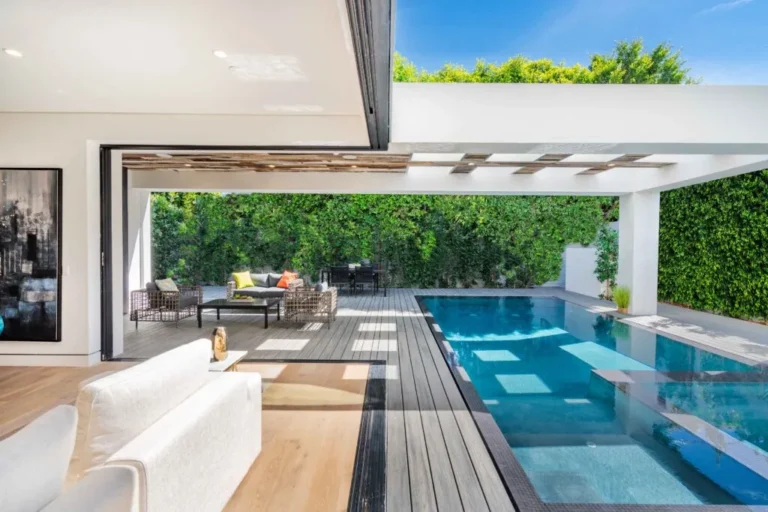
Dominant in Scandinavia and the coastal Pacific Northwest, these properties prioritize maximizing natural light through expansive floor-to-ceiling glass walls. While these open views provide an inspiring backdrop, they require advanced multi-paned glass treatments to prevent internal heat buildup and glare. These regions typically offer exceptional public utility infrastructure, with high-speed fiber-optic connectivity standard even in remote coastal locations.
Caribbean and Tropical Plantation Estates
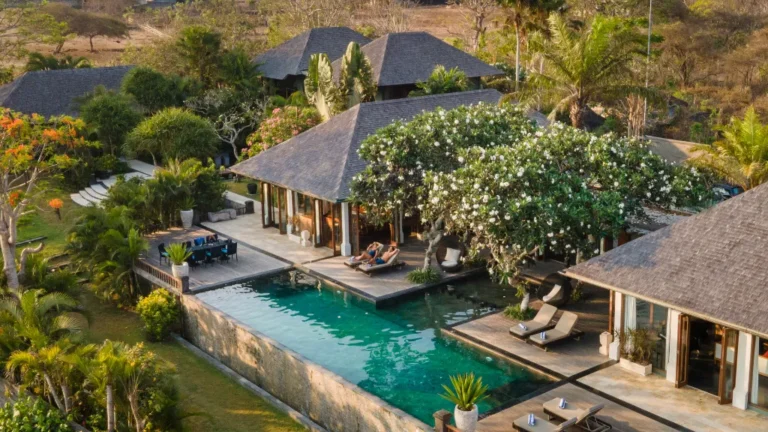
Found across the West Indies and Central American coastlines, these villas are elevated on pilings to optimize natural cross-ventilation and protect against seasonal storm surges. The tropical environment introduces high humidity and salt spray, which accelerate the wear and corrosion of computing hardware and mechanical cooling systems. To maintain operational stability, these properties require dedicated, sealed server enclosures equipped with independent dehumidification loops.
Western Aeolian Bluff Villas
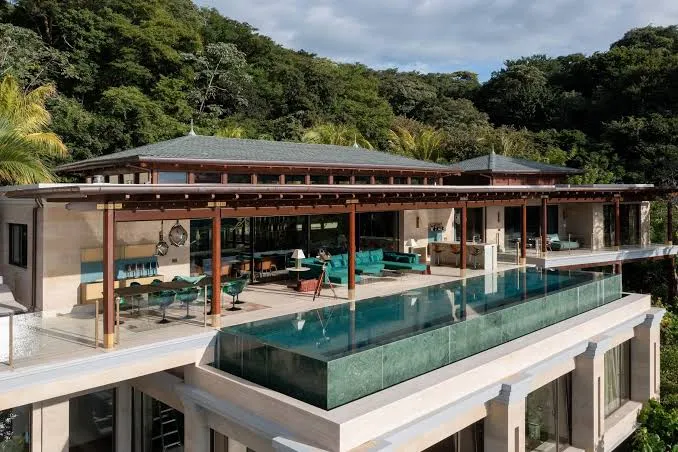
Positioned on steep cliffs along the Pacific coast, these structures are engineered to handle high winds and potential seismic activity. They are built using structural steel frames anchored deep into subterranean bedrock via micro-piles. Because of their isolated cliffside locations, these properties often sit at the very edge of terrestrial broadband networks, requiring directional microwave links or satellite arrays to maintain reliable high-speed data connections.
Operational Scenarios, Structural Constraints, and Second-Order Outcomes
Evaluating how a premium villa performs under real-world operational stress reveals the deep connections between architecture, utility infrastructure, and professional performance.
Scenario A: The Southern European Architectural Isolation
An executive secures a historic stone farmhouse in the interior of Mallorca for a two-month summer period involving complex corporate negotiations.
-
Systemic Constraints: The property features thick stone walls and relies on a local electrical grid prone to unexpected brownouts during peak summer afternoons.
-
Operational Decision Point: The local property manager recommends installing a basic consumer-grade wireless mesh network to extend internet coverage through the home’s historic interior.
-
Operational Failure: The wireless mesh units fail to penetrate the stone walls, causing frequent dropped connections during high-stakes video conferences. At the same time, an afternoon voltage drop crashes the main router, which lacks an uninterruptible power supply.
-
Second-Order Outcomes: The sudden network failure disrupts an essential corporate acquisition call, damaging professional credibility and delaying a key transaction by several weeks.
Scenario B: The Tropical Coastal Island Compound
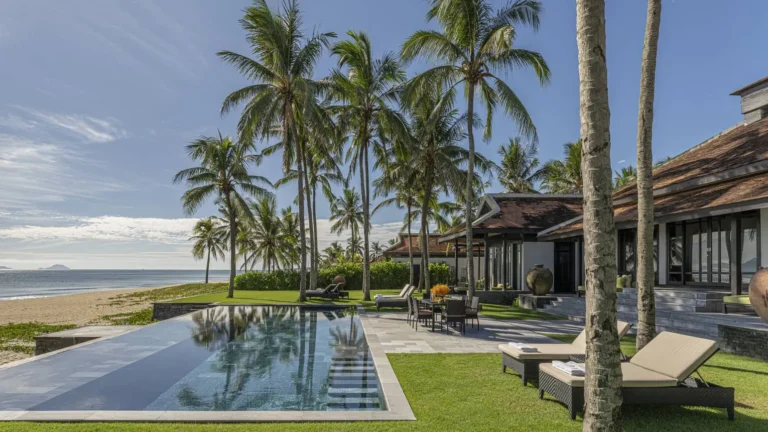
A technology consultant rents an oceanfront villa in the outer islands of the Bahamas during the mid-summer season to lead a system deployment.
-
Systemic Constraints: The island experiences frequent tropical storms that cause regular failures in the undersea data cables connecting it to the mainland.
-
Operational Decision Point: The owner must decide whether to invest in a commercial-grade low-Earth-orbit satellite array or rely on the local cellular data network for backup internet access.
-
Operational Failure: The owner relies on local cellular networks, but a passing tropical storm damages the nearest ground tower, knocking out cell service across the island for several days.
-
Second-Order Outcomes: The consultant is forced to halt work on the deployment, resulting in significant project delays and contractual financial penalties from clients.
Financial Engineering, Capital Expenditure Dynamics, and Resource Allocation
Maintaining a property that qualifies among the best summer villas for remote work requires a clear understanding of the unique financial demands of high-end coastal real estate.
Direct Operating Expenses vs. Long-Term Value Protection
Direct operational expenses include high-speed data subscriptions, regular technical maintenance, and specialized fuel reserves for backup generators. Long-term value protection, however, focuses on preventing the rapid wear and tear that electronics face in harsh coastal environments. Salt-laden air can quickly corrode delicate server contacts and computer cooling fans, requiring regular maintenance and specialized climate control setups to protect hardware investment.
Premium Insurance and Regulatory Realities
Insuring high-value properties equipped with advanced commercial-grade infrastructure introduces unique underwriting challenges. Insurance providers often require detailed certificates for wind and flood mitigation, alongside demanding professional inspections of all backup electrical systems. Deductibles in storm-prone coastal areas are typically calculated as a percentage of the property’s total value rather than a flat fee, meaning owners may face significant out-of-pocket costs before insurance coverage begins.
Technical Assemblies, Materials Science, and Professional Support Systems
Preventing building breakdown and operational interruptions in a summer workspace requires using advanced materials and reliable professional support networks.
Advanced Metallurgy and Hardware Protection
Standard aluminum and steel alloys corrode quickly when exposed to coastal air. High-performance properties use Grade 316 Stainless Steel or specialized titanium hardware for all exterior fittings, cable conduits, and structure connections. These alloys include molybdenum, a chemical addition that prevents surface pitting and structural weakening caused by airborne salt ions.
Smart Glass and Solar Control Technology
Modern working villas rely heavily on large glass panels to provide natural light without causing screen glare or overheating interior spaces. High-performance properties use multi-layered glass treated with low-emissivity (low-E) metal oxide coatings. These specialized layers reflect infrared heat and ultraviolet rays while letting visible light pass through, keeping interior temperatures stable and reducing the load on cooling systems.
Specialized IT and Engineering Support
Managing a property designed for high-level remote work requires specialized technical support beyond typical residential handymen. Asset managers employ certified network engineers to design and monitor network traffic, marine structural engineers to maintain shoreline foundations, and specialized HVAC technicians who understand the air pressure dynamics needed to keep humid, salty air out of sensitive workspace areas.
Risk Taxonomy, Degradation Mechanics, and Systemic Mitigations
The combination of high summer temperatures, salt air, and constant digital activity creates unique risks for premium working properties.
Mechanics of Galvanic Corrosion in Communication Lines
Galvanic corrosion occurs when two different metals make contact in the presence of moisture or salt air, creating a tiny electrical circuit. If an outdoor data terminal uses standard copper wire secured with basic steel screws, the contact points will rapidly oxidize and degrade. This breakdown causes signal loss and intermittent network dropouts long before physical wiring shows obvious signs of wear.
Concrete Degradation and Structural Spalling
Poured concrete foundations can absorb moisture and airborne salts over time. As water evaporates inside the concrete, expanding salt crystals create internal pressure that cracks the surface, a process known as efflorescence. If unmanaged, this salt penetration reaches the internal steel reinforcing bars, causing them to rust and expand. This expansion can fracture the concrete foundation from within, threatening the structural safety of the building.
Asset Governance, Maintenance Schedules, and Long-Term Adaptation
Preserving the functionality and value of premium workspaces over multiple seasons requires shifting from reactive repairs to predictive maintenance schedules.
Predictive Inspection Cycles
Advanced property management utilizes thermal imaging and drone inspections to spot hidden maintenance issues before they disrupt operations. Workspace walls, roof lines, and window frames are scanned regularly to detect moisture leaks or insulation gaps. Addressing these issues early prevents internal water damage and avoids the need for disruptive emergency repairs during busy work periods.
Evaluation Indicators, Performance Matrices, and Documentation Metrics
Property managers use both qualitative and quantitative measurements to track and evaluate the physical health and operational readiness of a premium workspace.
Leading vs. Lagging Performance Metrics
A lagging indicator measures a failure after it occurs, such as tracking the cost of repairing a broken air conditioner. A leading indicator monitors system performance to prevent failure, such as tracking daily changes in air pressure across air filters. Monitoring leading indicators allows teams to replace filters before sand blocks airflow, protecting expensive cooling machinery from unnecessary wear.
Professional Asset Logging and Maintenance Records
All maintenance and technical adjustments should be documented within a secure building management system. These digital records store exact material codes, hardware details, and technician notes. Having a complete, unedited history of system maintenance helps preserve the property’s long-term market value and proves its operational readiness to future occupants.
Example System Maintenance Logs
-
Log Entry 104: Cleaned and flushed all cooling lines on the primary server rack. Replaced air intake filters and confirmed internal humidity levels remain within safe operational parameters.
-
Log Entry 142: Updated firmware across all low-Earth-orbit satellite tracking systems. Tested network failover systems, confirming a smooth transition from fiber to satellite in under four seconds.
-
Log Entry 189: Inspected and tested all uninterruptible power supplies in the home office wing. Internal battery cells show optimal charge retention and normal operating temperatures.
Deconstructing Prevailing Industry Misconceptions and Operational Myths
The marketing around high-end seasonal rentals often creates unrealistic expectations about how these properties perform as professional workspaces.
The Misconception Around Raw Download Speeds
A common mistake is assuming that high download speeds are the only metric needed for a reliable remote workspace. While fast downloads help with streaming content, professional tasks like video conferencing and cloud data management rely heavily on consistent upload speeds and low network latency. A connection with high download speeds but poor stability will still cause dropped video calls and slow file transfers during peak usage hours.
The Myth of the Uninterrupted Rural Sanctuary
Many professionals look for isolated properties far from urban centers, believing that isolation guarantees a distraction-free work environment. However, remote rural locations are often the most vulnerable to infrastructure issues, including frequent power grid fluctuations and slow utility repair timelines. Without comprehensive on-site backup systems, a minor utility failure can leave an occupant offline and disconnected for days.
Socio-Economic Integrations, Regulatory Footprints, and Ethical Land Use
Building and operating high-performance seasonal workspaces can introduce unique economic and environmental challenges to local coastal communities.
Pressure on Local Utility Infrastructure
Premium properties equipped with high-powered server setups, continuous air conditioning, and advanced automation systems consume significantly more energy than typical seasonal residences. This high demand can strain local rural power grids, increasing the risk of voltage drops and service interruptions for nearby permanent residents. Forward-thinking property owners address this by installing on-site solar arrays and battery storage systems to reduce their impact on the community grid.
Compliance with Local Zoning and Short-Term Rental Rules
As local governments introduce stricter rules around short-term rentals, premium working villas must navigate complex zoning and tax regulations. Many communities enforce specific rules regarding property use, noise levels, and utility allocation. Property owners must ensure full compliance with these local frameworks to avoid costly fines, legal disputes, and potential operational shutdowns.
Synthesis of Premium Distributed Work Assets
Successfully choosing or managing a property within the selection of the best summer villas for remote work requires balancing premium design with operational discipline. These high-end coastal and rural estates offer an incredible setting for seasonal productivity, but their long-term success depends on structural engineering and infrastructure reliability. Whether renting a villa for a single summer project or managing a diverse real estate portfolio, maintaining operational continuity remains critical.
True professional utility is found beneath a property’s surface finishes, built into its core mechanical, power, and data systems. By choosing advanced materials, planning for utility independence, and keeping strict maintenance schedules, these properties can handle harsh environments while protecting work workflows. When design and infrastructure work together perfectly, a premium villa becomes more than a temporary retreat; it transforms into a highly productive professional outpost.